
Last updated November 15, 2026
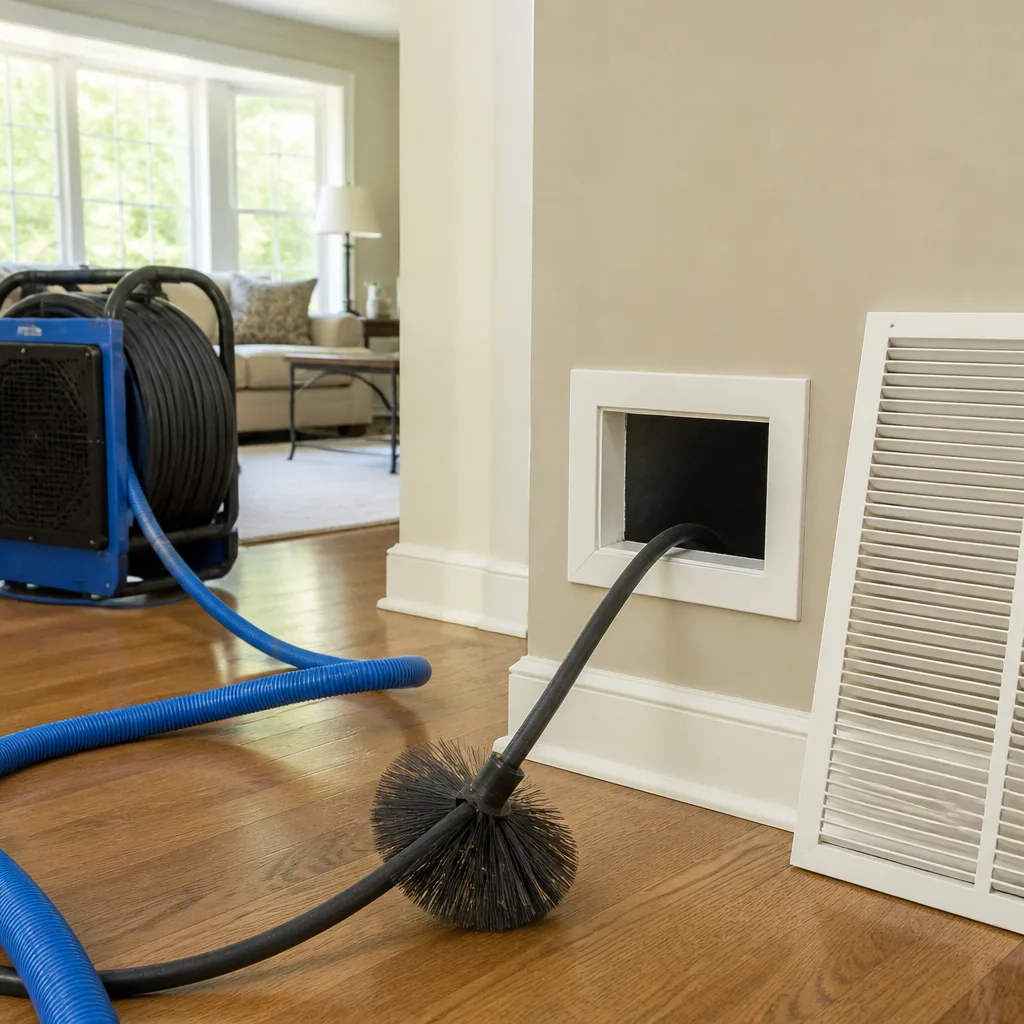 Whole-home duct cleaning
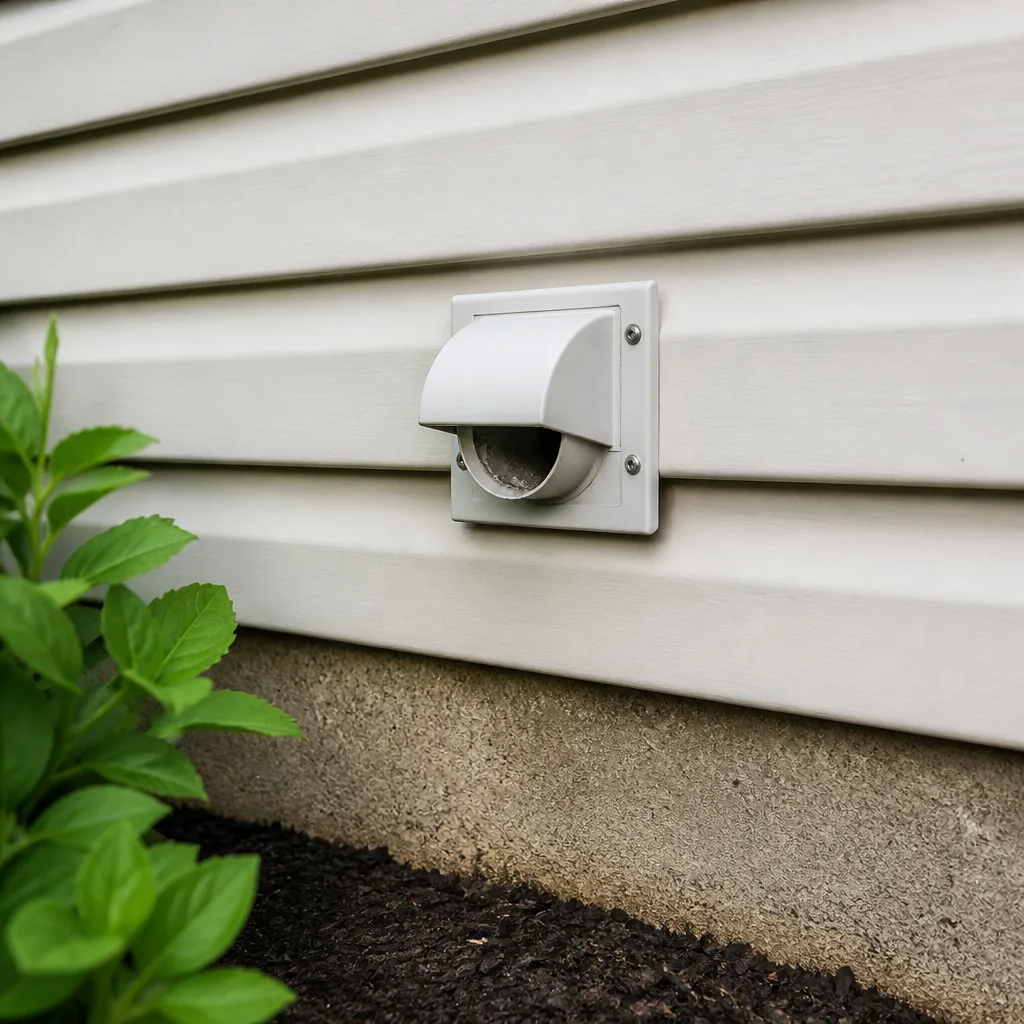 Dryer vent cleaning
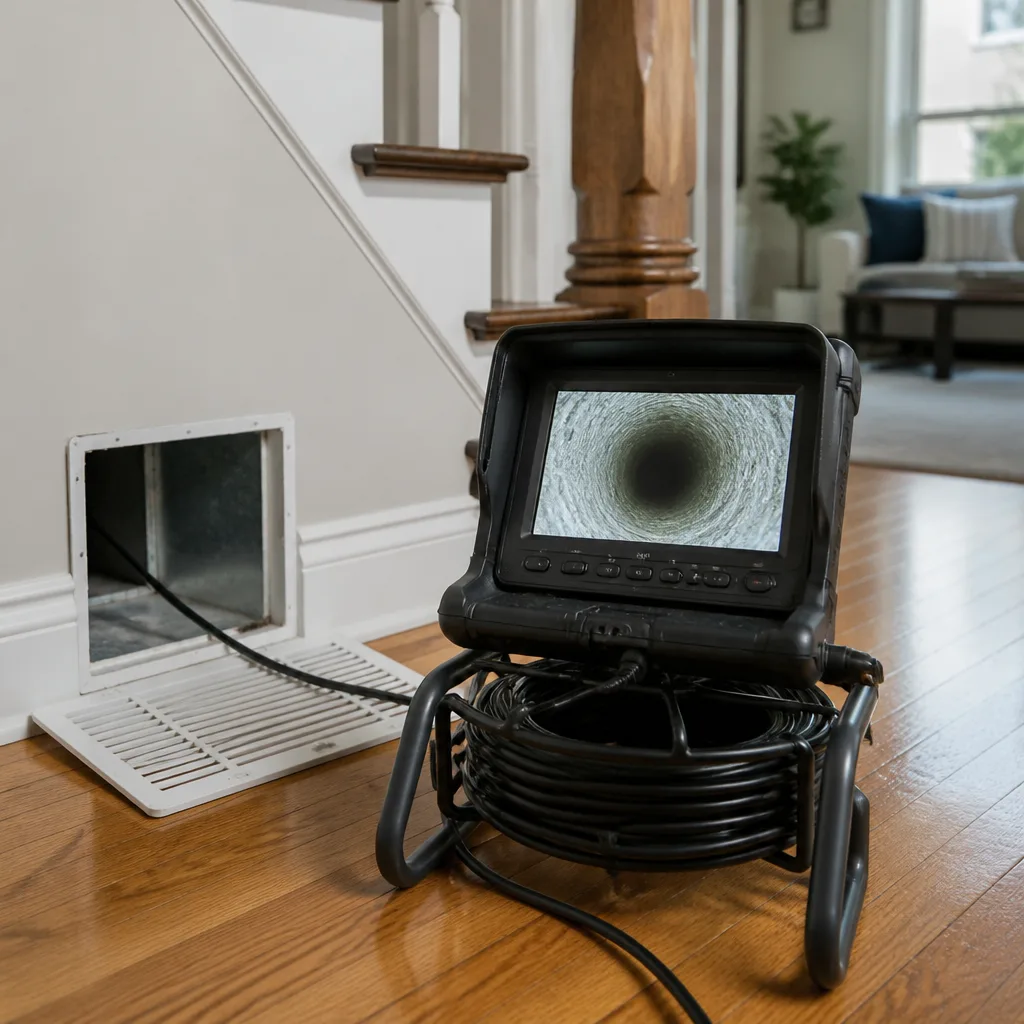 Camera inspection
 Sanitizing & deodorizing
Whole-system duct and dryer vent check with before-and-after photos - you see exactly what came out of your vents
That "$99 whole-house special" is a bait ad - the real number appears once they are in your hallway, or the "clean" is a shop-vac at the register. We photograph the inside of your ducts before and after instead.
The Complete Guide to Air Duct Cleaning in Greeley
A $99 coupon duct cleaning runs on roughly the same suction as the shop vac in your garage, and that’s the part the ad leaves out. Real duct cleaning depends on volume: contractor-class negative pressure and rotary agitation that loosens what has bonded to the walls of the duct, not a hose waved at a register for twenty minutes. Homes around Greeley sit at high altitude in a dry, dusty climate, and many were built before 1990, so flex runs sag and metal trunks collect years of grit. This guide walks through what a legitimate cleaning involves, from equipment to a post-job report you can read.
Quick Answer
A legitimate air duct cleaning pushes the whole system under continuous negative pressure, mechanically agitates every branch line with a rotary brush or contact vacuum, and verifies the result with before-and-after inspection. In Greeley, that usually means a longer job than a coupon crew schedules because the local dust load and older duct systems hold more debris. The written estimate sets the final price, and one flat price covers the whole system.
Styles & brands we work with
- Whole-home duct cleaning
- Dryer vent cleaning
- Camera inspection
- Sanitizing & deodorizing
Table of Contents
- Why Greeley Homes Collect More Duct Debris
- What a Legitimate Duct Cleaning Actually Involves
- Rotary Brush Systems vs. Contact Vacuum Wands
- What NADCA Source Removal Standards Require
- Negative Pressure and Abatement Technologies Filtration
- Duct Inspection Before and After Cleaning
- Duct Repair Discovered During Cleaning
- How to Read a Post-Cleaning Report
- Dryer Vent Cleaning as a Fire-Safety Service
- Common Mistakes to Avoid
- When to Call a Professional
- Frequently Asked Questions
Why Greeley Homes Collect More Duct Debris
Greeley sits high on the Colorado plains, where the air is thin, dry, and carries a lot of particulate. Wind off open ground and agricultural land west and north of town moves fine dust that finds its way into return grilles. Combine that with the dry swings between summer heat and winter cold, and you get duct systems that cycle through constant expansion and contraction. Every cycle opens small gaps at joints and seams, and fine grit works its way into the ducts through those gaps.
The housing stock matters just as much. Many neighborhoods across Greeley were built before 1990, when flex duct was pulled tight with short runs and shallow sag allowances that have since relaxed. Sagging flex creates low spots where dust settles and stays. Older galvanized metal trunk lines develop surface rust and pitting that traps debris in a way smooth new ductwork does not. In our experience cleaning across Greeley, pre-1990 builds routinely carry heavier debris loads than comparable square footage built after 2000 – not because the homeowner did anything wrong, but because the ductwork was designed when the local dust load was lower and the systems were less sealed.
Homeowners in Greeley often call after a renovation, a home purchase, or a season of allergies. In every case, the starting point is the same: understand what’s actually in the ducts before deciding what to do about it.
What a Legitimate Duct Cleaning Actually Involves
The word “cleaning” hides enormous variation. A legitimate air duct cleaning covers every accessible component in the system, not just the trunk lines the vacuum hose can reach. Here’s the sequence a professional-grade job follows, start to finish.
- Pre-inspection. The technician walks the system, opens access points, and records conditions on video or in photos before touching anything.
- System isolation and sealing. Registers are removed, and every opening is sealed so dislodged debris has nowhere to escape into living space.
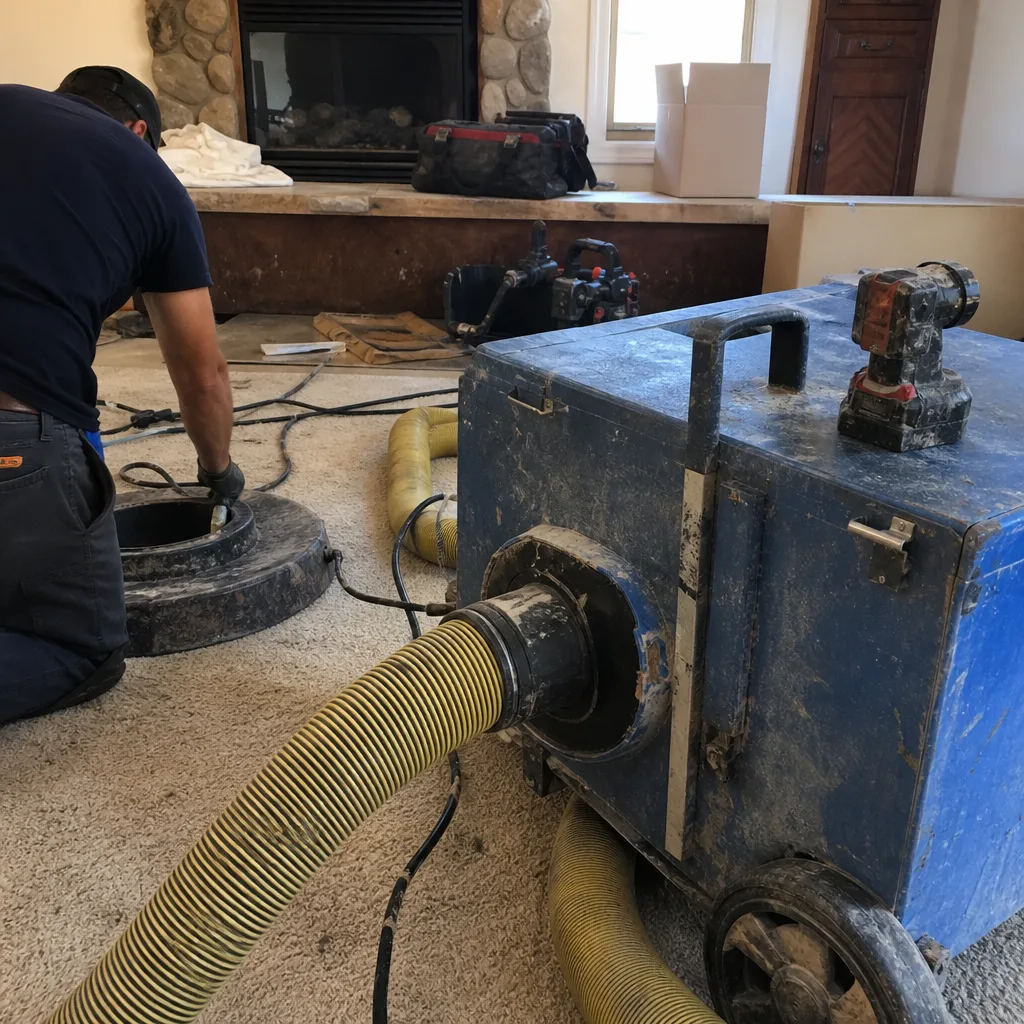
- Negative pressure established. A HEPA-rated vacuum connects to the main trunk, and the system runs under continuous negative pressure for the duration of the job.
- Mechanical agitation. A rotary brush or contact vacuum travels every branch line, loosening bonded debris so the vacuum can pull it out.
- Component cleaning. The blower, heat exchanger surfaces, evaporator coil, and plenum are cleaned with the appropriate method for their material.
- Post-cleaning verification. The technician re-inspects the same points recorded at the start and documents the result.
Skip any step in that sequence and you get a partial clean. Most coupon offers skip two or three. The professional-grade version takes longer and verifies itself at the end.
Rotary Brush Systems vs. Contact Vacuum Wands
The choice of tool depends almost entirely on duct material. Rotary brush systems like the Rotobrush are built for flex duct, which is the most common branch duct in residential Greeley homes. The brush spins inside the duct, scouring the inner lining while the vacuum pulls loosened material back to the collection unit. On flex, that mechanical action is what actually removes bonded dust films; suction alone can’t do it.
Metal duct calls for a different approach. Contact vacuum wands reach into rigid galvanized trunk lines and plenum assemblies where a rotary brush would catch on seams or fittings. The wand agitates under suction rather than spinning, which is gentler on older metal that may have rust or pitting.
- Flex duct: rotary brush (Rotobrush) with continuous HEPA vacuum.
- Rigid metal trunks: contact vacuum wand under negative pressure.
- Blower and coil: soft-brush or coil-specific tooling, no rotary agitation.
- Fittings and transitions: hand tools where the brush can’t reach.
Any cleaner who uses one tool for every system, or who skips rotary agitation on flex lines entirely, is delivering a partial job. The material determines the tool. There’s no substitute.
What NADCA Source Removal Standards Require
The National Air Duct Cleaners Association publishes the source-removal standard that reputable cleaners follow. It requires two things above all: that the whole system be placed under continuous negative pressure during cleaning, and that contaminants actually leave the system rather than being redistributed into the home. Those two requirements are the whole game.
What most coupon cleaners deliver, when measured against that standard, falls short in three ways:
- No sustained negative pressure. The vacuum runs at the register being cleaned rather than at the main trunk, so debris circulates.
- No mechanical agitation. A vacuum hose with no rotary tool just skims the surface of the duct walls.
- No verification. The job ends without before-and-after inspection, so the homeowner has no record of what was removed or what was left behind.
A cleaner who follows NADCA source-removal standard doesn’t necessarily advertise the standard by name. But they talk in the language of it: negative pressure, source removal, agitation, verification. If a technician’s pitch is only “we’ll clean your vents,” that’s a clue the process stops at the register and doesn’t reach the ducts.
Negative Pressure and Abatement Technologies Filtration
Negative pressure is where the whole method stands or falls. HEPA-rated collection equipment like the Nikro systems we use captures particles down to the finest dust. Abatement Technologies air scrubbers keep the work zone clean while debris is dislodged, pulling fine particulate out of the air rather than letting it settle back through the home.
Why filtration matters so much: when a rotary brush loosens years of bonded dust, that material becomes airborne the moment it releases. Without proper containment, it drifts out of the return, down the hallway, and settles on the bookshelf and the lampshade. The homeowner pays for a cleaning and gets a dust layer. Abatement Technologies scrubbers solve that by pulling the dislodged debris into filtration continuously during the job.
In our experience on Greeley jobs involving long flex runs or heavier debris loads – common in the older parts of town – air scrubbing is what keeps the room surrounding the return visibly clean from start to finish. It’s a small extra step that separates a professional clean from a shop-vac operation with a fancy decal on the side.
Duct Inspection Before and After Cleaning
Inspection isn’t an upsell. It’s the professional baseline, and its absence is the fastest way to know a cleaning was less than what you paid for. Pre-cleaning inspection records the condition of the system so the technician knows what they’re removing and the homeowner has a reference point. Post-cleaning inspection records the result against that reference.
Most modern duct cleaners can run a video camera into the branch lines and the main trunk. Where video isn’t practical, good photos of accessible interior surfaces work. What matters is that the same points are documented on both ends of the job.
- The technician opens returns and supply registers and photographs each.
- The main trunk interior is recorded with a camera or by photo through an access port.
- The blower compartment, coil, and plenum are photographed.
- The cleaning proceeds.
- The same points are recorded again at completion.
- The paired records go to the homeowner.
That last item is the point. If you weren’t offered before-and-after records of your own ducts, ask why. The right answer is not “we don’t do that” or “it’s not necessary” – it’s that the documentation is standard.
Duct Repair Discovered During Cleaning
Cleaning exposes problems. Disconnected flex joints, crushed runs behind drywall, leaks at seams, and separated collars all show up once the technician has access to the interior of the system. A cleaning-only company finds those problems and hands the homeowner a referral. A full-service shop fixes them on the spot.
We offer air duct repair as a standalone service and fold it into the cleaning job when the damage is found mid-process. Same visit, same team, no second appointment. The technician diagnoses the issue, verifies what it will take to correct, and updates the written estimate before doing the work. No surcharge for having found it during the cleaning visit. No referral to a separate contractor who may not return the call.
In Greeley, the two damage patterns we see repeatedly are crushed flex where a run passes under a hallway or closet, and separated collars where a mechanical joint has worked loose over years of thermal cycling. Both quietly bleed conditioned air into a wall cavity and pull dirty air back into the system. Cleaning without fixing them just means the ducts get dirty again faster.
How to Read a Post-Cleaning Report
A professional cleaning ends with documentation, not just a technician telling you it looks good. Here’s what a usable report contains and what to ask if it isn’t offered.
- Before-and-after photos of your own system. Not stock images, not manufacturer graphics: photos of the register and trunk interiors in your home.
- List of components serviced. Every register, every branch line, the main trunk, the blower, and the plenum should be named.
- Condition notes. Any damage found during cleaning should be listed, with a recommendation. That damage may become an estimate for repair.
- Findings on the coil and blower. Both are part of the system and both affect how clean the ducts stay.
- Written service summary. The one flat price you agreed to, with no additions beyond an approved repair estimate.
If you weren’t offered before-and-after photos of your own ducts, ask for them. If a cleaner can’t produce them, that’s a clear signal about what was – and wasn’t – cleaned.
Dryer Vent Cleaning as a Fire-Safety Service
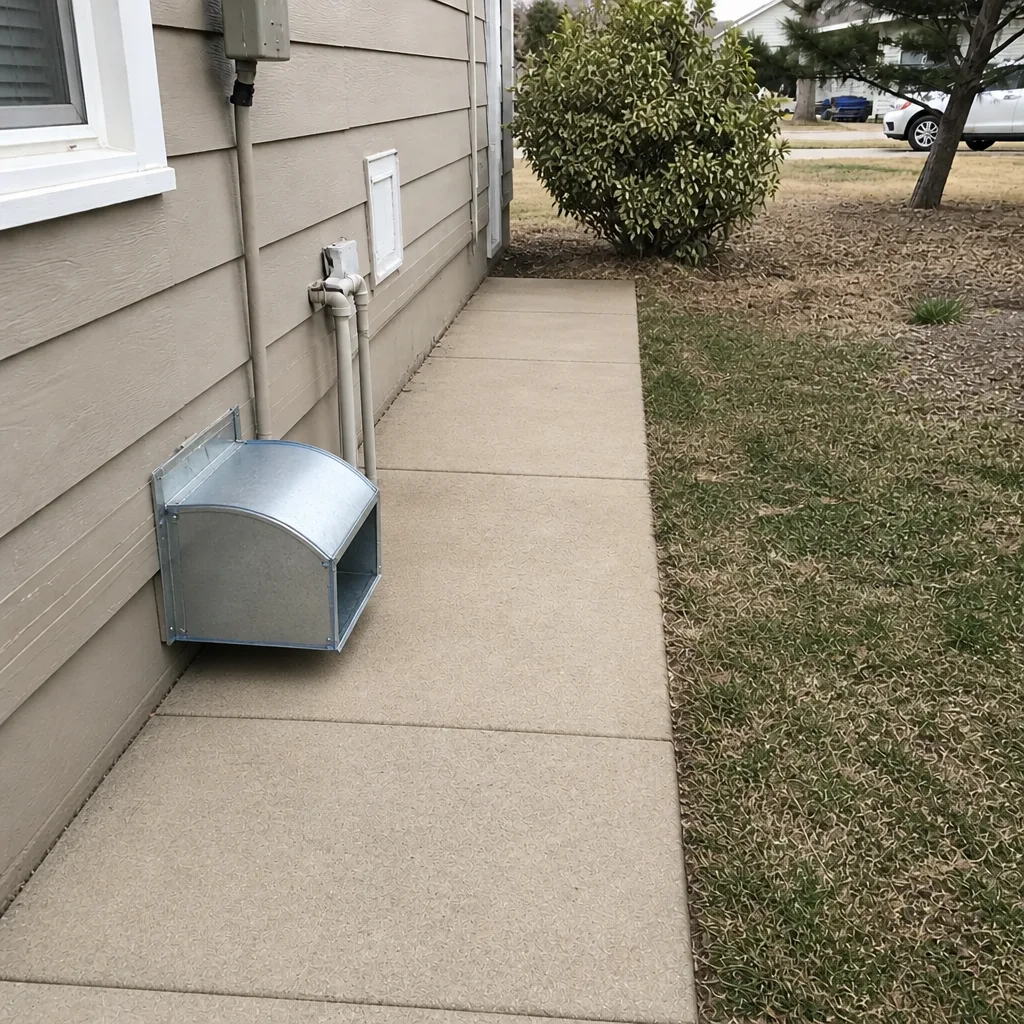
Duct cleaning and dryer vent cleaning are two different jobs on two different systems, and both matter. Lint buildup in a dryer vent is a documented fire hazard in residential settings. Heat from a running dryer meets a long, crowded lint column, and the whole thing becomes a fire risk the homeowner never sees because it’s in the wall.
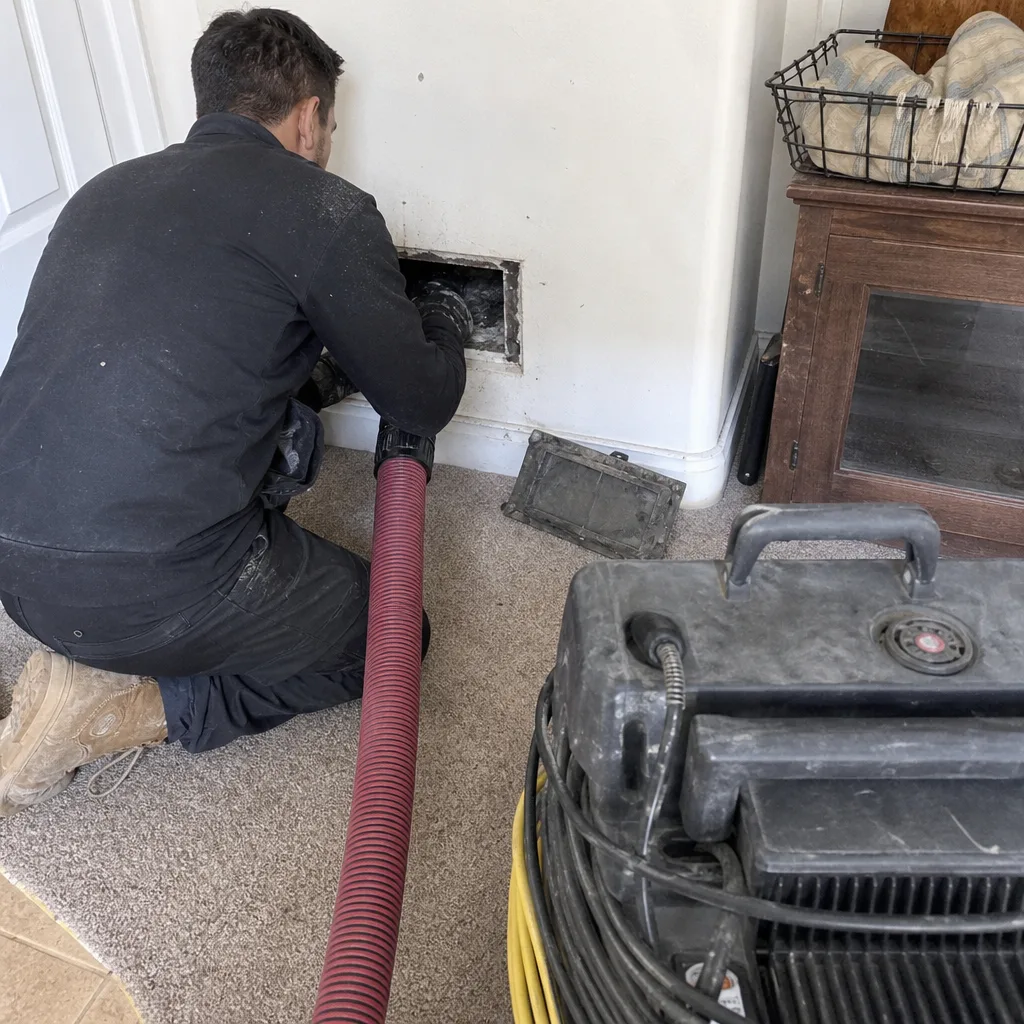
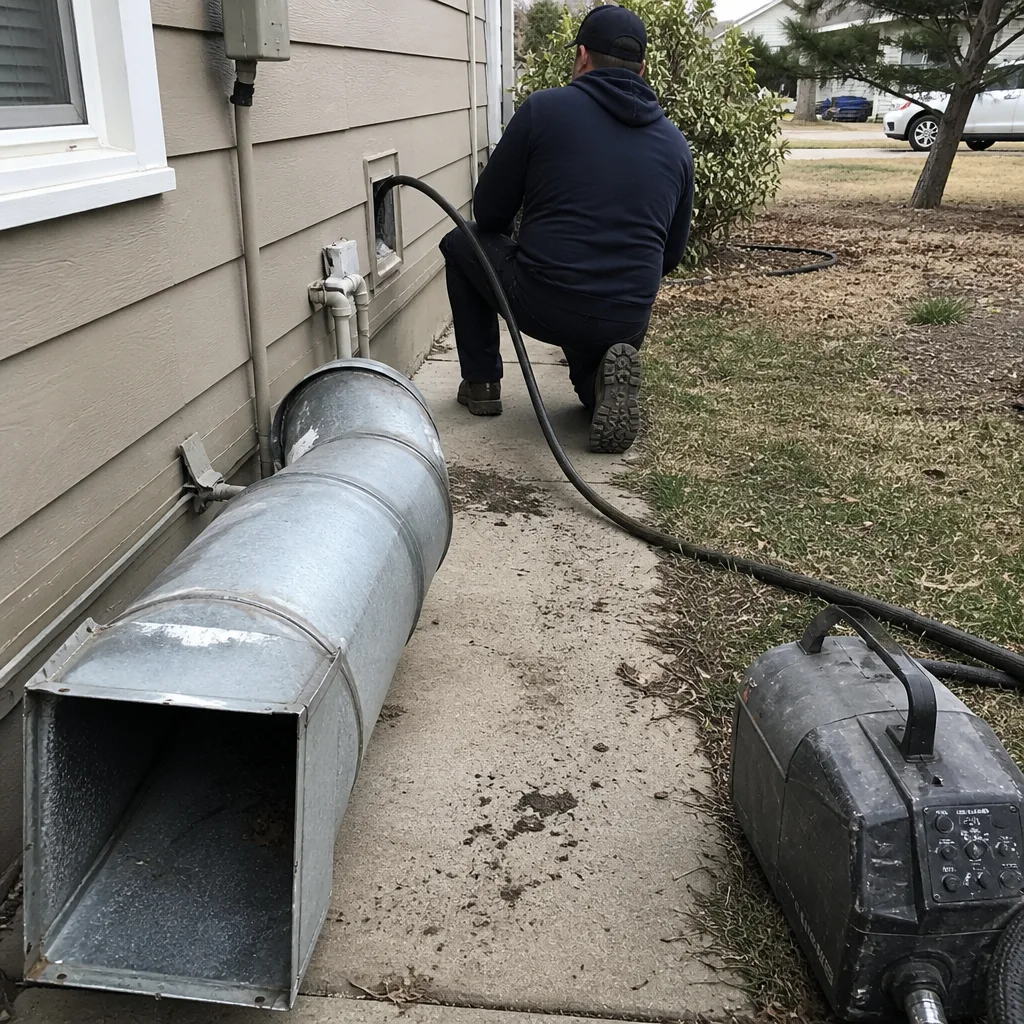
We treat dryer vent cleaning as its own dedicated service rather than an add-on to the duct job. The technician disconnects the dryer, runs the appropriate tool through the whole vent length, clears the exterior termination, and verifies airflow at the end. If the run is long, has elbows, or terminates through a roof, those are the situations where lint accumulates fastest and where cleaning needs to be most thorough.
While most duct cleaners will offer to clear a dryer vent for a small extra, treating it as an appendage means it gets a partial pass. The hazard is real, so the job should be done properly, not folded into a discount bundle.
See the difference
 Before
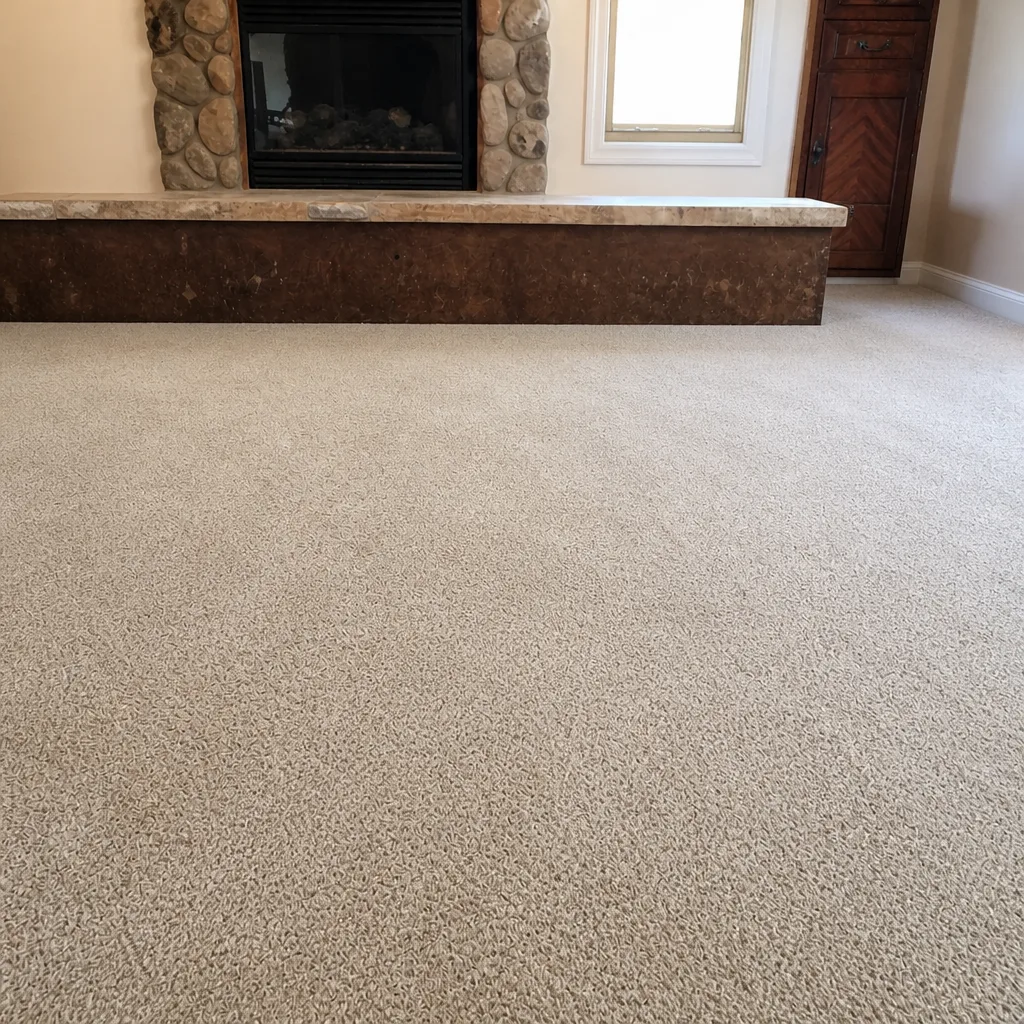 After
 Before
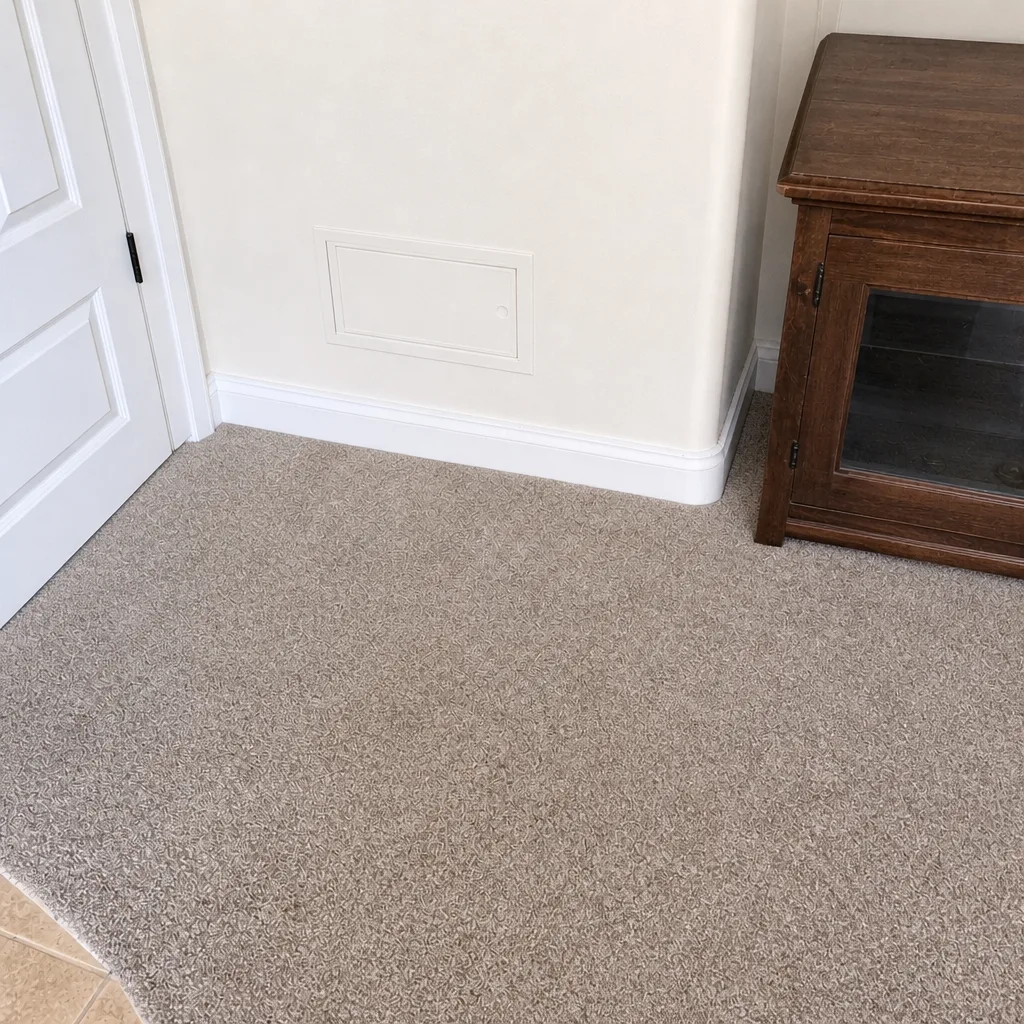 After
 Before
 After
Common Homeowner Comfort and Air-Quality Systems
Many Greeley homes carry higher-end filtration or humidity equipment that most duct cleaners ignore, or worse, work around by moving it, taping over it, and never putting it back correctly. Brands like Honeywell and Aprilaire are common in whole-home filtration and humidification systems. When a system uses those brands, the cleaning process should be compatible with them: filters checked and reinstalled correctly, humidifier pads inspected, and bypass components handled without damage.
If you have a whole-home filter or humidifier, tell the technician before the job starts. A professional-grade cleaning should leave your existing air-quality investment intact, not silently bypass it. It also matters after the job: fresh filter installation, correct seating, and a reminder about filter change schedules go a long way toward keeping a just-cleaned system clean.
Common Mistakes to Avoid
- Accepting a per-vent or per-register price. Any cleaner who quotes per register is encouraging you to open fewer registers, which means less thorough cleaning. Whole-system flat pricing is the professional standard.
- Trusting a coupon price without asking what it includes. The coupon is the teaser. The question is what gets cleaned for it, and whether negative pressure and mechanical agitation are actually included.
- Letting a cleaner skip rotary agitation on flex lines. Without mechanical agitation on flex, the dust stays bonded to the inner wall. Ask directly which tool is used on flex duct.
- Accepting a job with no before-and-after documentation. In Greeley, where debris loads run heavier than the national average, proof matters more than any verbal assurance. Photos of your own ducts are the baseline.
- Using a cleaning-only company for a system with damage. If the technician finds a crushed run or disconnected joint but can’t repair it, you’re left with a diagnosis and no path forward. Confirm repair capability up front.
- Treating the dryer vent as a coupon add-on. The dryer vent is a fire-safety component, not a bundled extra. It should be cleaned thoroughly, on its own merits.
- Ignoring filtration and humidifier systems during cleaning. If your Greeley home runs a Honeywell or Aprilaire whole-home system, buy from a cleaner who knows how to work around it. Silently bypassing it during the job is how air-quality equipment gets damaged.
When to Call a Professional
Duct cleaning isn’t a routine you should run on a calendar alone. Call a professional when you notice visible dust blowing out of a supply register, when a renovation has finished and drywall dust is in the air, after a home purchase where the prior owner’s maintenance history is unknown, or when someone in the home has seasonal allergies that seem worse indoors than out. Long-deferred maintenance in an older Greeley home is another clear trigger. If the ducts haven’t been inspected in years and the system is original to a pre-1990 build, an inspection alone tells you whether cleaning is worth doing now or can wait. Duct Cleaning Greeley offers free estimates in Greeley – call (833) 467-7154.
Frequently Asked Questions
Most whole-system air duct cleanings in Greeley fall into a range based on square footage, number of branch lines, and duct material, not per vent or per register. A written estimate sets the final price after inspection, and one flat price covers the whole system. Call (833) 467-7154 for an exact quote – estimates are free.
Most homes can go several years between cleanings, but Greeley’s dust load and older housing stock can shorten that. A video inspection every few years is the reliable way to decide, not a fixed calendar. If the inspection shows visible debris or a home has just finished a renovation, clean now and inspect again later. Call (833) 467-7154 to book an inspection and a written estimate.
Cheap quotes usually skip the sustained negative pressure, the rotary agitation on flex lines, or the before-and-after verification – sometimes all three. The low price is real, but it buys a partial job. Ask any cleaner what equipment they use and how they’ll document the result before accepting a quote. Call (833) 467-7154 if you’d like to compare a professional-grade estimate against what you’ve been quoted.
You should receive before-and-after photos of your own ducts, a list of components serviced, and condition notes on anything found during the job. Those records are the proof. If a cleaner can’t produce them, that’s your answer. Call (833) 467-7154 for an estimate and ask what documentation is included.
Yes. Crushed flex, disconnected joints, and leaking seams are common finds during a cleaning, and we handle the repair on the same visit rather than referring it out. The written estimate sets the final price before any repair work begins. Call (833) 467-7154 to schedule an inspection.
Greeley’s dry, high-altitude climate carries more airborne particulate than many metro areas, and the older housing stock in pre-1990 neighborhoods gives that debris more places to collect. Sagging flex and pitted metal trunk lines trap more than smooth, newer ductwork. That combination means the average Greeley system holds more debris than a similar home built after 2000. Call (833) 467-7154 for a professional-grade cleaning and a written estimate.
The Bottom Line
Duct cleaning is a process, not a coupon. Real cleaning means continuous negative pressure, mechanical agitation on every branch line, abatement-grade air filtration to contain what’s dislodged, and before-and-after verification of your own ducts. In Greeley, the local dust load and older housing stock make that whole sequence more valuable than it is in newer, milder climates. If you walk away from this guide with one rule, let it be this: any quote you accept should be a written, whole-system, flat-price estimate backed by documentation. That’s the professional baseline, and it’s what the cleaner you hire should be offering before they ever touch your system. Call (833) 467-7154. We answer 24/7. Fast dispatch from 7am to 7pm, Sunday through Friday. Estimates are free, and the written estimate sets the final price.
Written by the team at Duct Cleaning Greeley.